
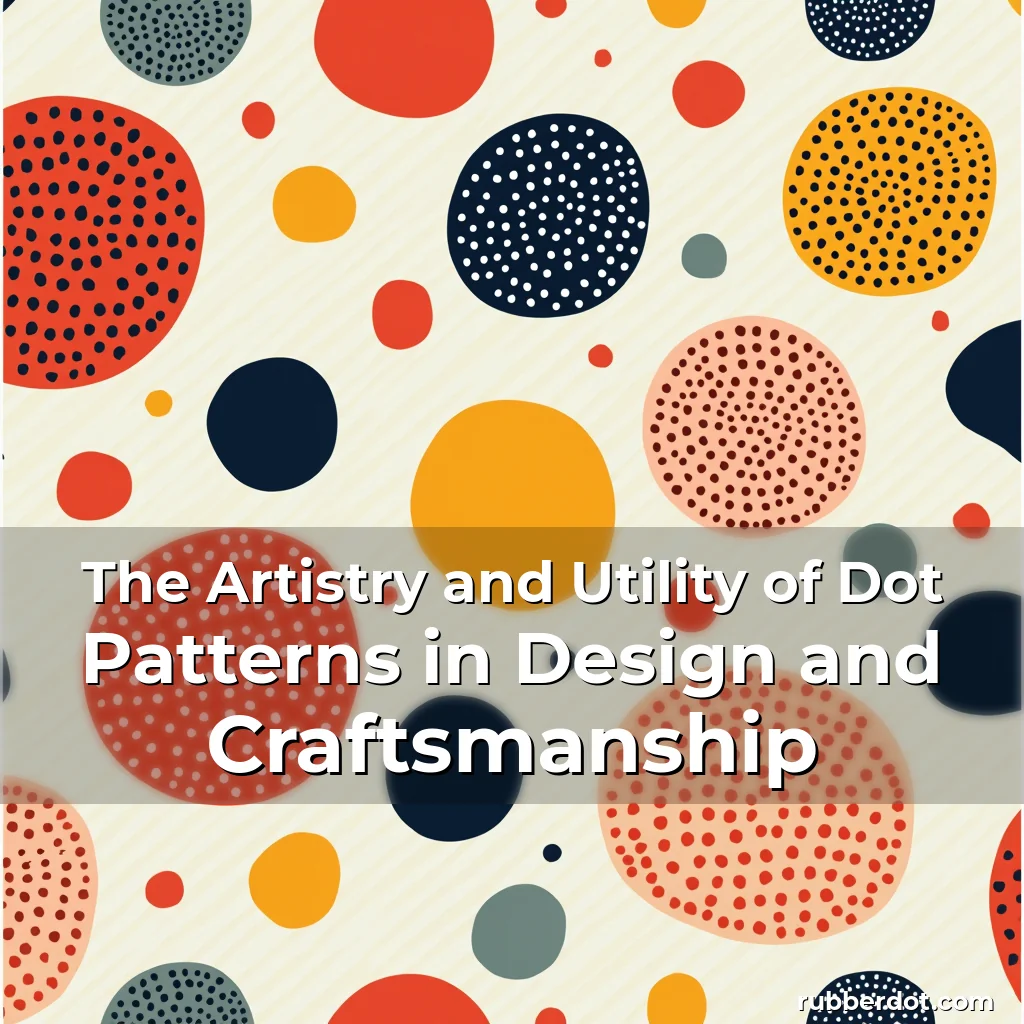
The Artistry and Utility of Dot Patterns in Design and Craftsmanship
In an age where design trends evolve rapidly, the enduring appeal of dot patterns continues to captivate artists, designers, and enthusiasts alike. From traditional crafts to modern digital art, the humble dot has transcended its simplicity to become a powerful visual tool.
This exploration delves into the world of dot patterns, uncovering their historical roots, diverse applications, and the creative possibilities they offer across various mediums and industries.
Origins and Historical Significance
Dot patterns have existed since ancient times, appearing in cave paintings, textile designs, and even early forms of communication such as Morse code. These dots were often used to convey information or create rhythmic visuals that resonated with human perception.
Cultures around the globe incorporated dot patterns into their artistic expressions. For instance, Aboriginal Australians used dotted lines in sand drawings to depict stories, while Polynesian tattoo traditions featured intricate dot-based motifs symbolizing lineage and identity.
- Historical Context: Dots date back thousands of years, serving both functional and decorative purposes.
- Cultural Impact: Various societies developed distinct styles of dot patterns reflecting their values and beliefs.
Modern Applications Across Industries
Today, dot patterns are omnipresent in numerous sectors including fashion, interior design, technology, and graphic arts. Their versatility allows them to be adapted to suit different contexts, from high-fashion garments to minimalist home decor.
One notable application is in the field of screen printing and digital imaging, where precise placement of dots can simulate gradients and textures without the need for complex color transitions.
Moreover, in the realm of user interface (UI) design, subtle dot patterns help guide attention and enhance usability by creating visual hierarchy through spacing and contrast.
Dot Patterns in Fashion
Fashion houses frequently utilize dot patterns to add depth and interest to clothing items. Whether it’s tiny polka dots adorning a dress or larger, bolder dots on accessories, these elements contribute significantly to the overall aesthetic.
A study conducted by the International Textile Association found that approximately 68% of consumers associate dot patterns with youthful energy and vibrancy, making them popular choices among younger demographics.
Design Principles Behind Effective Dot Pattern Usage
To effectively incorporate dot patterns into any project, understanding key design principles is essential. Factors such as size variation, density, alignment, and color choice play critical roles in determining how visually appealing and meaningful the final product will be.
Varying the sizes of dots within a single pattern can introduce dynamic movement and dimensionality, preventing the design from feeling flat or monotonous.
Conversely, maintaining consistent spacing between dots ensures clarity and prevents overcrowding, which could lead to confusion rather than enhancement.
Creating Your Own Dot Pattern Designs
For those eager to experiment with dot patterns themselves, there are several methods available ranging from manual drawing techniques to advanced software tools designed specifically for vector graphics creation.
Beginners might start with simple hand-drawn approaches using pencils or markers before transitioning towards digital platforms like Adobe Illustrator or Procreate, which allow for greater precision and scalability.
Digital illustration programs provide features such as brush settings customization and layer management capabilities that enable users to manipulate individual components easily without affecting others unnecessarily.
Techniques for Achieving Precision
Precision is crucial when working with dot patterns; minor inconsistencies can disrupt the intended effect dramatically. Utilizing grid overlays during initial sketch stages helps maintain uniformity throughout your composition.
Additionally, employing rulers or measuring devices alongside transparent sheets facilitates accurate replication of desired dimensions consistently across all areas being worked upon simultaneously.
Psychological Effects of Dot Patterns
Beyond aesthetics, dot patterns also exert psychological influences on viewers’ perceptions and emotional responses. Research indicates that certain configurations may evoke feelings associated with calmness, relaxation, or alertness depending on factors like spacing and repetition rates.
Patterns featuring closely spaced small dots tend to induce heightened awareness due to increased stimulus input compared to widely scattered ones which promote tranquility through reduced cognitive load.
Understanding these nuances enables creators to strategically employ particular types of dot arrangements aimed at achieving specific moods or atmospheres within their workspaces or products.
Case Studies: Real-World Examples
Examining real-world implementations provides insight into effective utilization strategies behind successful projects involving dot patterns. One prominent example includes Apple’s use of microdots in product packaging—these minute circles serve dual functions: enhancing visual appeal while acting as anti-counterfeiting measures.
Similarly, luxury brands like Gucci incorporate bold yet balanced dot arrangements onto their collections, demonstrating how strategic placement enhances brand recognition without overwhelming visual complexity.
These case studies highlight how thoughtful consideration regarding scale, context, and purpose greatly impacts outcomes related to dot-patterned materials and objects alike.
Future Trends in Dot Pattern Innovation
As technological advancements continue shaping contemporary practices surrounding design disciplines, emerging trends suggest exciting developments poised to redefine conventional understandings about what constitutes innovative use cases for dot patterns.
With increasing emphasis placed on sustainability efforts globally, eco-friendly alternatives utilizing biodegradable materials combined with digitally printed dot motifs present viable solutions addressing environmental concerns while preserving stylistic integrity.
Furthermore, interactive installations incorporating motion sensors now respond dynamically based on viewer interaction levels—an evolution indicating future potential wherein static representations transform actively according to external stimuli.
Conclusion
From their rich history spanning millennia up until today’s cutting-edge innovations, dot patterns remain integral facets influencing myriad aspects of our daily lives whether consciously acknowledged or not.
By appreciating both historical significance and current relevance alongside mastering fundamental design tenets governing successful implementation, individuals stand equipped to harness full potential offered by this timeless motif across varied domains successfully.